How to Stop 7 Year Old Whining: Strategies That Work for Second Graders

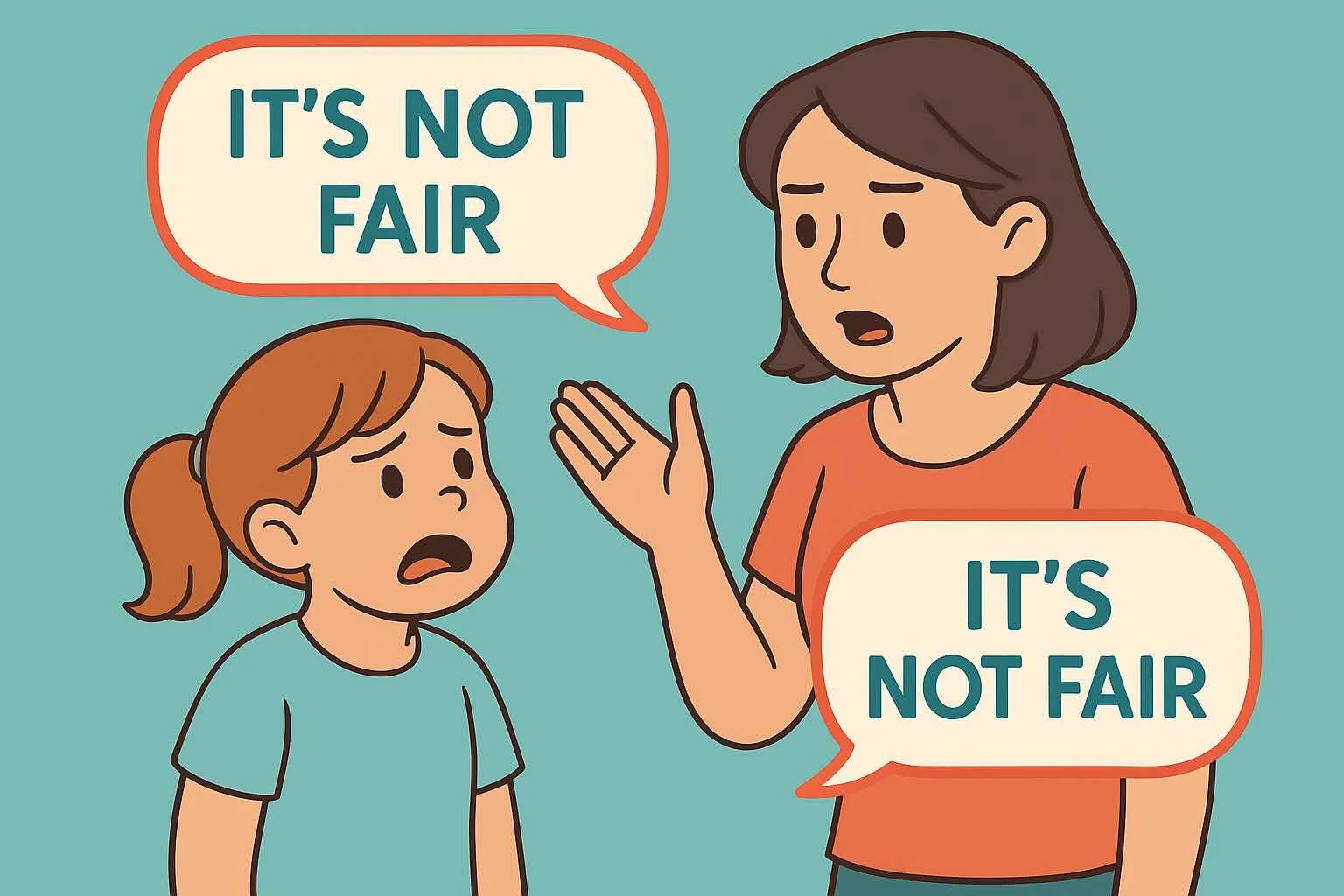
If your 7-year-old has perfected the art of strategic whining — complete with logical arguments, emotional manipulation, and deliberate social pressure tactics - you're dealing with a child who possesses advanced cognitive abilities while still developing mature emotional regulation. Seven-year-olds are capable of abstract reasoning, complex social analysis, and deliberate influence strategies that make their whining both more challenging and more amenable to comprehensive intervention approaches.
Unlike younger children who whine from emotional overwhelm or simple strategic attempts, 7-year-olds often whine with deliberate purpose and advanced understanding. They comprehend adult psychology, can predict complex reactions, and may use whining as a carefully chosen tool to negotiate, avoid responsibilities, manipulate outcomes, or gain special consideration. They're also navigating increasingly complex academic and social worlds that can trigger both genuine stress and calculated communication strategies.
This comprehensive guide provides expert-level strategies specifically designed for 7-year-old developmental capabilities and complex challenges. With evidence-based approaches and realistic timelines, these methods work for 95% of families within 1-3 weeks. For foundational concepts, see our complete whining guide. Also see 6 year old whining if your child is still 6.
- ✓7-year-olds wield sophisticated arguments — justice debates, peer comparisons, psychological insights about your parenting
- ✓Don't engage the debate's logic mid-whine — "Tell me in your regular voice and I'll give your argument real consideration"
- ✓"Interesting points deserve regular voices" — validate reasoning while refusing the manipulation package
- ✓Most families see major improvement within 1-3 weeks because 7-year-olds can understand and honor explicit expectations
- ✓Schedule a real conversation window for their arguments — it channels the analytical brain into the right time slot
What You'll Learn in This Guide
- The 7-Year-Old Advanced Profile - How advanced elementary development creates complex whining patterns
- Complex Whining Analysis - Identifying strategic, emotional, habitual, and stress-related whining types
- Comprehensive 3-C Method - Advanced responses for cognitively advanced and emotionally complex children
- Academic and Social Complexity - Addressing second-grade pressures and intricate peer relationship dynamics
- Advanced Emotional Intelligence - Building nuanced communication and self-awareness capabilities
- Expert Manipulation Management - Handling advanced guilt-inducing, bargaining, and logical argument techniques
- Prevention Through Mastery - Meeting advanced elementary needs to eliminate whining triggers
- Communication Excellence Foundation - Building skills that support adolescent and adult relationship success
Estimated reading time: 18 minutes
Understanding the 7-Year-Old Mind
The Peak Elementary Development Impact
Advanced cognitive development affecting communication:
Abstract reasoning mastery:
- Understanding complex logical systems, advanced cause-and-effect relationships, and multi-step problem-solving
- Ability to plan targeted strategies, predict complex outcomes, and analyze multiple variables simultaneously
- Advanced understanding of social hierarchies, justice concepts, moral reasoning, and abstract fairness principles
- Beginning to grasp complex concepts like reputation, loyalty, integrity, and long-term consequences
Emotional complexity and nuance:
- Processing layered, nuanced emotions while developing advanced regulation capabilities
- Understanding that emotions can be strategically used to influence others' decisions and behavior
- Experiencing academic and social pressures that create new forms of stress and anxiety
- Developing advanced emotional self-awareness while still needing guidance for mature expression
Social navigation mastery:
- Managing intricate, multi-layered peer relationships involving complex loyalty, betrayal, inclusion, and exclusion dynamics
- Understanding complex social contexts and adapting communication approaches accordingly
- Comparing family dynamics, rules, and responses to multiple other families with analytical precision
- Beginning to understand advanced concepts like peer pressure, social conformity, group dynamics, and social influence
Communication advancement and complexity:
- Highly expanded vocabulary for describing complex situations, emotions, and abstract concepts with precision
- Advanced ability to construct compelling arguments, present logical cases, engage in complex debate, and use persuasion
- Understanding of deliberate persuasion techniques, emotional appeals, strategic timing, and audience analysis
- Recognition of how different communication styles affect different people in various situations with strategic application
The Second Grade Academic and Social Complexity Effect
Why advanced elementary school intensifies complex whining patterns:
Advanced academic performance pressure:
- Complex formal assessments, comparative grading, and formal performance analysis with peers
- Increased homework expectations, independent project requirements, and multi-step academic problem-solving
- Processing detailed feedback about academic strengths, weaknesses, learning differences, and comparative performance
- Managing perfectionist tendencies, performance anxiety, and competitive academic environments with multiple measures
Intricate social navigation requirements:
- Highly complex friendship dynamics involving complex loyalty, betrayal, inclusion, exclusion, and group membership
- Understanding intricate peer group hierarchies, social status systems, and classroom social dynamics with multiple layers
- Managing conflicts with friends, teachers, and classmates using increasingly complex social strategies
- Processing complex social feedback about personality, behavior, social skills, and peer acceptance from multiple sources
Advanced independence and responsibility expectations:
- Balancing significant autonomy expectations with remaining dependency needs in deliberate ways
- Managing different behavioral expectations between home, school, peer environments, and extracurricular activities
- Processing conflicting messages about appropriate emotional expression across various complex social settings
- Navigating authority relationships with multiple teachers, coaches, and adult figures with different styles and expectations
Common Categories of 7-Year-Old Whining
Strategic academic manipulation whining:
- "This assignment is designed for kids way older than me and the teacher doesn't understand that I need more help than she's giving me"
- Complex reasoning designed to get parents to advocate with teachers or reduce academic expectations
- Often includes detailed analysis of academic requirements, teacher methods, or educational philosophy
- May involve complex arguments about learning differences, classroom management, or academic fairness
Advanced social manipulation whining:
- "Everyone thinks our family is weird because we have different rules and it's affecting my social status and friendships"
- Uses deep understanding of peer pressure, social dynamics, and family reputation to influence decisions
- Often involves detailed social analysis of peer groups, friendship hierarchies, and social consequences
- May include threats about social isolation, reputation damage, or friendship loss if parents don't comply
Complex emotional manipulation whining:
- "You care more about being right and maintaining control than about understanding my perspective and emotional needs"
- Highly guilt-inducing language designed to make parents doubt their decision-making and parenting approach
- Often includes psychological insights about family dynamics, parental motivations, and relationship patterns
- May involve advanced threats to withdraw emotional intimacy or claims about parental love being conditional on compliance
Complex justice and fairness whining:
- "This rule violates basic principles of fairness because it's applied inconsistently and doesn't take into account individual circumstances"
- Involves complex arguments about equality, justice, logical consistency, and moral reasoning
- Often includes detailed analysis of family rule systems, perceived inconsistencies, and comparative family practices
- May involve deep understanding of legal, moral, or philosophical concepts applied to family decisions
Advanced perfectionist anxiety whining:
- "I can't attempt this because if I don't do it perfectly, it will prove I'm not as smart as everyone thinks and then my whole academic reputation will be ruined"
- Reflects real anxiety about performance, social judgment, and long-term consequences of imperfection
- Often involves complex understanding of social evaluation, academic competition, and reputation management
- May include detailed analysis of perfectionist standards, social expectations, and performance anxiety
The 3-C Method for 7-Year-Olds
The foundational approach requires comprehensive adaptation for advanced elementary cognitive and emotional development.
C #1: Stay Calm (Expert Emotional Leadership)
Why calm is absolutely crucial with strategic minds: Seven-year-olds are conducting advanced analysis of adult emotional regulation as a model for their own development while simultaneously testing whether complex emotional expression can influence adult decision-making processes. Your calm response demonstrates advanced emotional maturity while teaching that manipulation, regardless of complexity, is ineffective.
Comprehensive calm strategies:
- Advanced cognitive complexity: "This is complex skill-building and relationship development, not a negotiation or power struggle"
- Complex emotional preparation: Anticipate advanced manipulation attempts and prepare measured, thoughtful responses in advance
- Expert physiological mastery: Maintain stable breathing, voice tone, body language, and emotional energy regardless of provocation or complexity
(Getting drawn into debate) "That's not TRUE! We're consistent! Last Tuesday I...
Your argument deserves real consideration. In your regular voice, I'll give it my full attention. Whiny voice, I can't.
- Long-term perspective maintenance: Remember their developmental appropriateness while maintaining appropriately high expectations for their capabilities
What your comprehensive calm communicates to analytical minds:
- Adult decisions are made through careful consideration, not reactive responses to children's emotional expression or complex arguments
- Advanced emotional regulation is achievable even during complex, challenging interactions
- Whining and manipulation, regardless of complexity or intelligence, don't create emotional chaos or changed outcomes
- Family stability and adult leadership exist independently of children's approval, agreement, or emotional comfort
C #2: Stay Composed (Expert Measured Responses)
Why composed responses are critical with strategic 7-year-olds: Seven-year-olds can read micro-expressions, interpret subtle voice changes, detect hesitation or uncertainty, and analyze body language for evidence of adult emotional reactivity. They're conducting careful analysis of your reactions for evidence that their advanced whining strategies might eventually succeed or create desired emotional responses.
Expert composed responses:
- Complex neutral acknowledgment: "I hear whining" (without emotional reactivity, engagement, or analytical response)
- Clear expectation statement: "Use your regular voice" (firm, calm, non-negotiable, and consistent regardless of complexity)
- Strategic processing pauses: Allow appropriate processing time while maintaining confident, stable body language and emotional energy
- Consistent demeanor: Maintain identical energy and approach regardless of whining complexity, intensity, or strategic appeal
Avoid these responses that encourage advanced strategic complexity:
- "You're too intelligent to be acting like this" (implies intelligence should eliminate all emotional expression challenges)
- "I don't have time for these manipulation games" (suggests whining is about timing, attention, or strategic effectiveness)
- "Fine, your argument is convincing this time" (teaches that persistent pressure and reasoning eventually succeeds)
- Engaging in complex debates about the logic, fairness, or advanced reasoning behind their whining arguments
C #3: Stay Consistent (Unshakeable Advanced Boundaries)
Why consistency is absolutely critical with analytical minds: Seven-year-olds are advanced enough to conduct complex, long-term experiments on family systems with complex variables. They remember what worked across different circumstances, analyze patterns across family members and situations, and may test consistency across extended periods to find exceptions, weaknesses, or situational variables that might affect outcomes.
Expert consistency requirements:
- Identical thoughtful responses: Use exact same language regardless of whining complexity, emotional intensity, logical appeal, or strategic timing
- Cross-contextual comprehensive application: Same expectations whether child is stressed, overwhelmed, tired, upset, or presenting complex arguments
- Universal family application: All family members and caregivers must respond identically with no exceptions for different adult styles
- Absolute no negotiation policy: Consistency during your difficult days, their difficult days, extraordinary circumstances, and complex persuasion attempts
Building unshakeable comprehensive consistency:
- Document exact response scripts for various challenging scenarios and practice until completely automatic
- Discuss advanced manipulation attempts and advanced reasoning with all caregivers comprehensively in advance
- Plan detailed responses for complex scenarios and deliberate manipulation before they arise
- Review and reinforce approach weekly with all caregivers to maintain perfect alignment across all situations
How to Respond to 7-Year-Old Whining
Phase 1: The Advanced Communication Discussion
Seven-year-olds can engage in highly meaningful conversations about communication effectiveness, relationship dynamics, social skills, and long-term personal development.
Step 1: Acknowledge Their Advanced Cognitive Development "Now that you're seven and in second grade, you have very advanced thinking abilities and you're old enough to understand complex concepts about communication, relationships, social skills, and how people respond to different ways of expressing feelings, needs, and disagreements."
Step 2: Analyze Advanced Communication Effectiveness "I've noticed you've been using whining, dramatic language, and complex arguments to try to get what you want or change family decisions. You're extremely intelligent, and you've probably analyzed that sometimes these strategies get reactions from adults or make them reconsider their decisions. Let's examine together whether these strategies actually work well for you in the long run."
Step 3: Connect to Advanced Social and Academic Success "Think carefully about your friendships, your relationship with teachers, how you want people to perceive you, and the kind of person you want to become. When someone whines at you or tries to manipulate you, how does it affect your respect for them and your desire to help them? The same principles apply when you use these strategies with others."
Step 4: Set Advanced Expectations "You have highly developed abilities to express even very complicated, frustrating, or disappointing feelings using clear, respectful, nuanced communication. This is a crucial life skill that will help you succeed in school, friendships, family relationships, and throughout your entire life in all areas."
Step 5: Collaborative Advanced Strategy Development "Let's work together to develop targeted strategies you can use when you notice yourself feeling like whining or when you want to advocate for something you believe in. What are some advanced approaches you could use instead?"
Phase 2: Expert Comprehensive In-the-Moment Response Protocol
Level 1: Advanced Expectation Reminder "I hear whining. You know exactly what to do."
Level 2: Brief Professional Redirection (If Level 1 Insufficient) "Regular voice."
Level 3: Specific Advanced Guidance (If Needed) "Express this clearly: 'I disagree with this decision because [specific reasoning].'"
Level 4: Boundary Setting with Natural Consequence "I'm ready to discuss this situation when you can communicate about it maturely. Take the time you need."
Level 5: Natural Consequence Implementation with Learning Opportunity "I can see you're having difficulty using mature communication right now. When you're ready to try again with respect and clarity, we can address this together and work toward a solution."
Phase 3: Expert Advanced Scenario Management
Scenario 1: Complex Academic Manipulation with Complex Reasoning Child whines: "This homework assignment is pedagogically inappropriate for my developmental level and you're being educationally negligent by forcing me to complete work that's designed for children with different learning styles and capabilities!"
Your response: "I hear whining disguised as educational analysis. You have concerns about your homework that deserve discussion. Use your regular voice to tell me specifically what feels challenging about this assignment, and we'll address it appropriately."
Scenario 2: Advanced Social Pressure with Social Psychology Child whines: "Everyone in my class thinks our family has unreasonable rules compared to their families, and it's negatively affecting my social integration and peer relationships in ways that could impact my long-term social development!"
Your response: "I hear whining about social concerns using deliberate language. Social acceptance can feel very important at your age. Use your regular voice to tell me about your friendships and how you're handling social differences, and we can discuss appropriate strategies."
Scenario 3: Expert Emotional Manipulation with Advanced Psychology Child whines: "You're prioritizing your need for control and authority over my emotional well-being and individual needs, which is creating an unhealthy family dynamic that doesn't support my psychological development!"
Your response: "I hear whining with advanced psychological language designed to make me question my parenting. I care deeply about your emotional well-being, which is why I make decisions based on what's best for your development. You can say 'I disagree with this decision' in your regular voice, and we can discuss it."
Scenario 4: Fairness Arguments with Logical Analysis Child whines: "This rule demonstrates logical inconsistency in our family system because it contradicts other family policies and creates an arbitrary standard that doesn't align with the principles you've taught me about fairness and justice!"
Your response: "I hear whining presented as logical analysis. You're thinking carefully about family rules and fairness, which shows good reasoning ability. Express your thoughts in your regular voice: 'I think this rule is inconsistent because...' and we can have a real discussion about it."
Managing Academic and Social Complexity at Age 7
Understanding Second Grade Stress Impact
Why advanced academic pressure triggers complex whining:
Complex performance anxiety development:
- Complex formal assessment and comparative grading creating multiple categories of success, failure, and peer comparison
- Advanced homework expectations, independent project requirements, and multi-step academic problem-solving with increasing complexity
- Processing detailed, nuanced feedback about academic strengths, weaknesses, learning differences, and comparative performance analysis
- Managing perfectionist tendencies, performance anxiety, competitive academic environments, and multiple complex measures of success
Intricate social complexity stress:
- Navigating highly complex friendship dynamics involving complex loyalty, betrayal, inclusion, exclusion, group membership, and social hierarchy
- Understanding intricate peer group hierarchies, social status systems, classroom social dynamics, and multiple overlapping social circles
- Managing complex conflicts with multiple peers simultaneously using advanced social strategies and emotional intelligence
- Processing complex, nuanced social feedback about personality, behavior, social skills, peer acceptance, and social reputation from multiple sources
Addressing Advanced Academic-Related Whining
Complex performance anxiety whining: When child whines about academic challenges, tests, projects, or grades using advanced language:
"I hear whining about academic challenges using expanded vocabulary. Academic pressure can feel overwhelming, especially when you have high standards for yourself. Use your regular voice to tell me specifically what feels most challenging, and let's develop a comprehensive plan to support your success."
Advanced follow-up strategies:
- Break complex tasks into smaller, manageable strategic components
- Teach advanced study skills, organization strategies, and academic self-advocacy
- Communicate comprehensively with teachers about learning needs, appropriate challenges, and support strategies
- Address perfectionist thinking patterns and performance anxiety with deep understanding
Complex teacher relationship whining: When child whines about teacher expectations, feedback, methods, or classroom dynamics:
"I hear whining about your teacher and classroom experiences. School authority figures and classroom dynamics can feel complex and sometimes frustrating. Use your regular voice to tell me specifically what happened and how you're feeling about it, and we can discuss appropriate ways to handle the situation."
Advanced follow-up strategies:
- Validate their analytical observations while supporting appropriate teacher authority and respect
- Teach deliberate ways to advocate for themselves at school while maintaining respectful relationships
- Coordinate comprehensively with teachers if genuine concerns exist about classroom dynamics or teaching methods
- Help them understand complex relationship dynamics across various settings and authority figures
Complex peer academic comparison whining: When child whines about others' academic performance, abilities, or classroom recognition:
"I hear whining about academic comparisons and classroom dynamics. Everyone has different strengths, challenges, and learning styles, which can create complex classroom experiences. Use your regular voice to tell me how you're feeling about your own learning and academic experience."
Advanced follow-up strategies:
- Focus on personal growth, individual progress, and effort rather than peer comparison and competition
- Celebrate individual strengths, progress, and unique capabilities while acknowledging areas for growth
- Address competitive feelings, social comparison anxiety, and perfectionist academic expectations
- Build complex confidence in their unique strengths, capabilities, and individual learning journey
Managing Complex Advanced Social Relationship Whining
Complex friendship conflict whining: When child whines about peer relationships, exclusion, social challenges, or friendship dynamics:
"I hear whining about complex friend situations. Friend relationships can involve very complicated dynamics at your age, with multiple people and various social factors. Use your regular voice to tell me specifically what happened and how you're feeling about it, and we can work together to develop targeted strategies for handling it."
Advanced follow-up strategies:
- Teach complex conflict resolution, social problem-solving skills, and emotional intelligence
- Role-play complex approaches to social challenges, peer pressure, and friendship dynamics
- Build advanced confidence in their social abilities, worth, and authentic self-expression
- Address any bullying, exclusion, or serious social concerns comprehensively with school and other parents
Advanced social pressure and comparison whining: When child whines about what other families allow, what peers have, or social expectations:
"I hear whining about differences between families and social pressures. Every family makes different choices based on their unique values, circumstances, and priorities. Use your regular voice to tell me what you're hoping for and what social pressures you're feeling, and we can discuss our family's reasoning and ways to handle peer pressure."
Advanced follow-up strategies:
- Explain family values, decision-making processes, and reasoning comprehensively and age-appropriately
- Help them understand that different family choices don't indicate better or worse families
- Build complex pride in family identity, choices, and values while respecting other families
- Teach advanced strategies for handling peer pressure, social differences, and maintaining authentic self-expression
Building Emotional Intelligence in 7-Year-Olds
Teaching Complex Emotional Concepts
Advanced complex emotional vocabulary for 7-year-olds: Seven-year-olds can understand highly complex emotional concepts and learn precise, nuanced emotional language.
Expert-level complex feeling words:
- Overwhelmed: "I have more responsibilities, emotions, or challenges than I feel capable of managing effectively right now"
- Anxious: "I'm experiencing worry and concern about potential future events or outcomes that I can't control"
- Frustrated: "I want to accomplish something important to me but I'm encountering obstacles that are preventing my success"
- Disappointed: "Something didn't turn out the way I hoped, expected, or believed it would, and I'm sad about that outcome"
- Embarrassed: "I feel uncomfortable and self-conscious about what others might think of my behavior, appearance, or performance"
- Confident: "I feel sure about my abilities, decisions, and capacity to handle challenges successfully"
- Guilty: "I feel bad about something I did that I believe was wrong, hurtful, or inconsistent with my values"
- Relieved: "I feel better and more relaxed because something I was worried about is resolved or turned out better than expected"
- Jealous: "I want something someone else has and I feel bad that I don't have it, which is creating negative feelings toward them"
- Proud: "I feel good about something I accomplished, a choice I made, or progress I've achieved through my efforts"
- Resentful: "I feel angry about something I perceive as unfair or wrong that has happened to me"
- Contempt: "I feel superior to someone and look down on their behavior or choices"
Teaching Advanced Emotional Complexity and Complex Nuance
Multiple complex emotions simultaneously: "You can feel excited about the school talent show AND nervous about performing in front of many people AND proud of your preparation efforts AND worried about making mistakes. All of these different feelings can be true at the same time, and that's completely normal for complex situations."
Advanced emotional intensity variations with deep understanding: "This seems like medium-level frustration about your science project, not overwhelming frustration that makes it impossible to continue. Can you identify the difference in intensity and what that means for how you handle it?"
Complex emotional temporariness with advanced perspective: "This disappointed feeling about not being invited to the party will feel much less intense tomorrow, significantly less intense next week, and probably won't affect you much at all next month. Understanding that emotions change over time helps us handle them better."
Advanced appropriate emotional expression with complex social awareness: "It's completely normal and healthy to feel angry when someone treats you unfairly. AND there are helpful and unhelpful ways to express that anger that will affect your relationships, reputation, and ability to solve the problem."
Advanced Complex Problem-Solving vs. Emotional Support
Teaching nuanced distinction with complex understanding: Seven-year-olds can learn advanced concepts about when they need practical problem-solving vs. emotional support and validation, and how to communicate these different needs clearly.
Advanced problem-solving communication: "I'm struggling with this research project because I can't find reliable sources for my topic and I don't understand how to evaluate whether information is credible. Can you help me develop strategies for finding and assessing good sources?"
Complex emotional support communication: "I'm feeling really sad and disappointed that my best friend chose to spend her birthday party with other girls instead of including me. I don't need you to fix this situation, but I need someone to understand how much this hurts and help me process these feelings."
Your complex differentiated responses:
- For problem-solving: "Let's work through this systematically and develop a comprehensive plan"
- For emotional support: "That does sound really painful and disappointing. Tell me more about how this experience is affecting you."
Prevention Strategies for Second Graders
Meeting Complex Advanced Developmental Needs
Advanced intellectual stimulation and complex challenge: Seven-year-olds need appropriate mental challenges that match their growing cognitive abilities and advanced reasoning skills.
Complex practical applications:
- Provide age-appropriate complex puzzles, strategy games, brain teasers, and intellectual challenges
- Include them in complex household problem-solving, decision-making, and planning processes
- Offer opportunities for creative expression, independent projects, and advanced skill development
- Engage them in meaningful conversations about their interests, observations, current events, and complex topics
Advanced competence and complex mastery: Elementary-age children need comprehensive opportunities to develop expertise, advanced skills, and feel genuinely capable.
Building advanced complex competence:
- Teach complex life skills that match their developmental capabilities and intellectual interests
- Provide opportunities for leadership, helping others, and advanced responsibility
- Celebrate their growing independence, advanced reasoning, and advanced problem-solving abilities
- Acknowledge their strong problem-solving attempts, creative solutions, and independent thinking
Complex autonomy within advanced structure: Seven-year-olds need significant independence within clear, consistent, complex boundaries that respect their advanced capabilities.
Advanced complex autonomy practices:
- Include them meaningfully in family decision-making when appropriate and age-relevant
- Allow them to make significant choices about their activities, friendships, interests, and personal expression
- Respect their developing complex opinions, preferences, and individual identity
- Teach them to advocate appropriately and effectively for their needs, wants, and beliefs
Advanced Complex School Success Support
Advanced academic confidence building with deep understanding:
- Focus comprehensively on effort, improvement, learning process, and personal growth rather than just outcomes and grades
- Help them understand that struggle, mistakes, and challenges are normal, valuable parts of learning and development
- Build specific advanced academic skills through practice, support, and strategic skill development
- Coordinate comprehensively with teachers about learning needs, appropriate challenges, and complex support strategies
Complex social skill development with advanced understanding:
- Teach complex conflict resolution, friendship skills, and advanced emotional intelligence
- Practice complex social scenarios through discussion, role-play, and problem-solving
- Help them understand intricate social dynamics, peer relationships, and complex group interactions
- Support their developing complex social identity, authentic self-expression, and advanced group membership skills
Advanced stress management and complex emotional regulation:
- Teach age-appropriate complex stress management techniques and emotional regulation strategies
- Help them recognize, understand, and respond effectively to their complex emotional states and triggers
- Build comprehensive routines that support emotional regulation, recovery, and complex stress management
- Provide emotional safety, understanding, and support during challenging periods and complex transitions
Handling Negotiation and Manipulation Attempts
Complex Advanced Guilt-Inducing Strategies
When 7-year-olds use highly complex emotional manipulation:
Child: "I can tell you don't really understand or appreciate how emotionally difficult my life is compared to other kids because you have different priorities and you care more about rules than about my individual psychological needs and emotional well-being." Your response: "You're feeling like your emotional experiences aren't being fully understood or appreciated, and that's a valid concern that deserves attention. Express this in your regular voice: 'I feel like you don't understand how hard things are for me right now,' and let's talk about your specific experiences and how I can better support you."
Child: "Everyone at school is going to think I have controlling, unreasonable parents if you don't let me do this, and it's going to affect my social reputation and peer relationships in ways that could damage my self-esteem and social development." Your response: "You're concerned about how our family decisions might affect your social relationships and what your friends think about our family. That's understandable. You can say 'I'm worried about what my friends will think about this rule' in your regular voice, and we can discuss ways to handle social pressure and peer differences."
Child: "Fine, I guess I'll just stop sharing important things with you since you obviously don't value my perspective, trust my judgment, or care about maintaining a close relationship where I feel heard and understood." Your response: "I value your perspective very much and I want us to have a close relationship where you feel comfortable sharing important things with me. I make decisions based on what I believe is best for your development, not based on whether you agree with them. You can say 'I disagree with your decision and I wish you would reconsider' without threatening our relationship."
Teaching Advanced Complex Advocacy vs. Manipulation
Appropriate complex advocacy skills: "If you disagree with a family rule, decision, or approach, here are deliberate ways you can advocate for yourself appropriately: [teach specific advanced communication skills, logical presentation methods, and respectful disagreement strategies]"
Inappropriate deliberate manipulation tactics: "Trying to make people feel guilty, using psychological language to manipulate emotions, comparing our family negatively to others, or threatening to damage relationships are not effective ways to get what you want and they actually harm relationships and trust."
Building complex relationship-based influence: "The most effective way to influence people over time is through honest communication, demonstrating responsibility and maturity, building trust through consistent behavior, and showing respect for others even when you disagree with them."
Realistic Timeline for 7-Year-Old Improvement
Week 1-2: Advanced Complex Strategy Testing
What to expect:
- Highly deliberate resistance including complex logical arguments, emotional appeals, and advanced manipulation techniques
- Testing boundaries with extremely advanced manipulation techniques and advanced reasoning
- Possible escalation in whining complexity and persistence as simpler methods prove consistently ineffective
- Strategic timing of complex whining attempts when they analyze you might be more likely to give in
- Some genuine surprise and confusion about new expectations versus previously somewhat effective targeted strategies
Your goals:
- Maintain absolutely perfect consistency despite highly deliberate resistance and complex logical arguments
- Stay completely calm during complex, advanced emotional manipulation attempts without engaging in debates
- Address deliberate manipulation directly and calmly without becoming defensive or taking emotional bait
- Continue teaching nuanced communication skills during calm, connected moments with advanced instruction
- Begin documenting specific triggers, patterns, targeted strategies, and most effective response techniques
Success markers:
- Child can engage in highly complex conversations about communication effectiveness and complex relationship dynamics
- Occasional success with switching to appropriate communication when reminded, showing understanding
- Beginning deep understanding that advanced manipulation is no more effective than simple whining
Week 1-3: Advanced Integration and Complex Mastery
What to expect:
- Very rapid improvement in communication choices once they understand expectations are completely firm and consistent
- Advanced self-awareness, self-correction abilities, and complex emotional self-regulation
- Better complex emotional regulation and advanced emotional expression capabilities
- Significant decrease in manipulation attempts as they prove consistently ineffective across all situations
- Improved cooperation with communication expectations and enhanced family harmony and respect
Your goals:
- Move to very minimal prompts as they demonstrate deep understanding and advanced capability
- Celebrate nuanced communication improvements and emotional growth with specific, meaningful acknowledgment
- Address any remaining challenging situations with continued perfect consistency and advanced support
- Build advanced emotional intelligence, social communication skills, and complex self-advocacy abilities
- Continue supporting academic and social success while maintaining high communication expectations
Success markers:
- Child demonstrates advanced self-correction, complex emotional awareness, and mature communication choices
- Regular voice becomes strongly preferred and automatic communication method across all situations
- Sophisticated, appropriate emotional expression completely replaces dramatic whining and manipulation
- Better overall emotional regulation, family cooperation, and advanced relationship skills
Troubleshooting Common Challenges
When Advanced Academic Pressure Triggers Complex Regression
High-stakes complex situations that may trigger whining:
- Important standardized tests, advanced academic assessments, or complex academic evaluations
- Challenging multi-step homework assignments, projects, or advanced academic requirements
- Academic competitions, performances, or advanced academic presentations
- Complex teacher conferences, academic feedback sessions, or educational planning meetings
Your comprehensive response: Provide complex support while maintaining advanced communication expectations: "I can see you're feeling significant pressure about this advanced academic challenge. That's completely understandable - complex academic demands can feel overwhelming even for very capable students. AND we still use our mature voices to discuss our concerns and develop effective strategies. Use your clear voice to tell me specifically what you're most worried about, and we can create a comprehensive plan to support your success."
Managing Advanced Perfectionism and Complex Performance Anxiety
When whining stems from complex perfectionist concerns: "I hear whining about wanting to achieve perfection in your academic work. Perfectionism can create intense stress and actually interfere with learning and performance. Use your regular voice to tell me what you're most concerned about making mistakes on, and we can discuss healthy approaches to challenge, growth, and learning from errors."
Advanced follow-up strategies:
- Teach complex concepts about mistakes being essential for learning, growth, and skill development
- Model your own complex mistake-making and recovery processes with detailed explanation
- Focus comprehensively on effort, improvement, learning process, and personal growth rather than perfect performance
- Build complex tolerance for imperfection, comfort with challenge, and resilience through difficult tasks
Addressing Advanced Social Complexity and Complex Peer Pressure
When whining involves complex social manipulation and advanced peer pressure: "I hear whining about complex social situations and peer pressure. Friend relationships and social dynamics can become very complicated at your age, with multiple layers and complex considerations. Use your regular voice to tell me specifically what's happening socially and what pressures you're feeling, and we can discuss advanced strategies for handling peer pressure, maintaining authentic friendships, and navigating complex social situations."
Building complex social confidence:
- Teach advanced social skills, complex conflict resolution, and complex emotional intelligence
- Help them understand healthy vs. unhealthy friendship dynamics with careful analysis
- Build comprehensive confidence in their social worth independent of peer approval or social conformity
- Support their developing complex social identity, authentic self-expression, and advanced individual values
Building Long-Term Communication Skills
Connecting Complex Communication to Advanced Life Success
Advanced academic success connection: "The clear, nuanced communication skills you're developing will serve you throughout your entire educational journey. Teachers, professors, and academic mentors appreciate students who can express their needs clearly, ask thoughtful questions, advocate for themselves appropriately, and work through challenges with maturity and respect."
Complex social success connection: "Friends, peers, and eventually romantic partners are drawn to people who can communicate honestly about their feelings without drama, manipulation, or emotional games. These advanced communication skills will help you build strong, lasting, authentic relationships throughout your entire life."
Advanced future preparation: "Learning to express complex emotions clearly, advocate for yourself appropriately, handle disagreement respectfully, and maintain relationships even during conflict are important skills you'll use throughout your life in relationships, education, career, parenting, and all areas of personal and professional success."
Building Advanced Complex Emotional and Social Intelligence
Advanced complex self-awareness:
- Help them recognize their complex emotional patterns, triggers, and communication tendencies
- Teach them to identify their communication choices and analyze their effects on others and relationships
- Build advanced awareness of their impact on family dynamics, friendships, and various relationships
- Celebrate their growing emotional maturity, complex thinking, and advanced communication development
Complex advanced relationship skills:
- Teach complex empathy, perspective-taking, and emotional intelligence in complex social situations
- Help them understand different communication styles, preferences, and cultural approaches to expression
- Build advanced skills in reading social cues, adapting communication accordingly, and respecting individual differences
- Support their developing deep understanding of healthy relationship dynamics, mutual respect, and authentic connection
Your 7-Year-Old Action Plan
Daily Advanced Practices
- ✅ Respond consistently to all whining with calm, expert-level redirection regardless of complexity
- ✅ Celebrate nuanced communication when they express complex emotions clearly, appropriately, and maturely
- ✅ Model advanced emotional intelligence in your own daily interactions, family communication, and conflict resolution
- ✅ Address manipulation attempts directly without becoming defensive, taking bait, or engaging in power struggles
- ✅ Provide comprehensive academic and social support while maintaining clear, high communication expectations
Weekly Advanced Practices
- ✅ Practice complex emotional vocabulary through books, real situations, complex conversations, and emotional analysis
- ✅ Discuss family values and communication expectations at an age-appropriate level with advanced reasoning
- ✅ Coordinate comprehensively with school about behavioral expectations, academic progress, social development, and any communication concerns
- ✅ Review challenging situations and problem-solve better responses collaboratively with careful analysis
- ✅ Build advanced emotional and social intelligence through complex emotion recognition, social skill practice, relationship discussion, and conflict resolution
Monthly Comprehensive Review
- ✅ Track nuanced communication improvements and reduced whining frequency across all settings and situations
- ✅ Assess academic and social adjustment and emotional development progress with careful analysis
- ✅ Adjust strategies based on developmental changes and what's proving most effective with advanced evaluation
- ✅ Celebrate growth in emotional maturity, communication complexity, social competence, and advanced relationship skills
- ✅ Plan for upcoming challenges like academic pressures, social changes, family transitions, and developmental milestones
Key Takeaways: Mastering 7-Year-Old Communication Excellence
- ✅ Seven-year-olds are capable of highly nuanced communication when expectations are clear and consistently maintained
- ✅ Academic and social pressures trigger complex, advanced whining - provide comprehensive support while maintaining high standards
- ✅ Address deliberate manipulation directly without becoming defensive or engaging in complex debates about logic or fairness
- ✅ Teach advanced emotional vocabulary to replace dramatic, manipulative, or complex inappropriate expression
- ✅ Connect communication skills to advanced academic and social success to build strong internal motivation and long-term perspective
- ✅ Maintain unwavering consistency across all settings, situations, stress levels, and deliberate manipulation attempts
- ✅ Build complex emotional intelligence through complex emotion recognition, advanced expression teaching, and relationship skill development
- ✅ Support comprehensive school success while addressing advanced communication development needs at home
- ✅ Focus on complex relationship-building rather than control to create lasting communication improvement and mutual respect
- ✅ 1-3 weeks of expert consistency typically brings significant improvement in advanced elementary-age children
- ✅ Professional support is available if whining is accompanied by serious academic, social, emotional, or developmental difficulties
Remember: You're not just eliminating annoying behavior - you're building highly lasting life skills that will serve your child throughout their academic career, social development, family relationships, and into adulthood with advanced capabilities. The nuanced communication abilities they develop now will help them succeed academically at advanced levels, build strong authentic friendships, handle complex social situations with emotional intelligence, manage academic and social pressure with resilience, navigate challenging life circumstances with confidence and strong problem-solving abilities, and develop into emotionally intelligent, articulate adults.
Seven-year-olds who master these advanced communication skills become highly articulate, emotionally intelligent children who can advocate for themselves appropriately in complex situations, handle disappointment and pressure with advanced resilience, build strong relationships based on honest communication rather than manipulation, approach challenges with confidence and strong problem-solving abilities, and develop the foundation for healthy adolescent and adult relationships based on mutual respect, authentic expression, and emotional maturity.
Related Whining Guides by Age
- Complete Whining Guide (Ages 3-7) — Foundation strategies for all ages
- Age-Specific Whining Strategies — Side-by-side comparison by stage
- How to Stop 5-Year-Old Whining — Kindergarten whining and school stress
- How to Stop 6-Year-Old Whining — First grade whining and fairness arguments
This approach is based on current child development research and proven behavioral strategies. Individual results may vary based on child temperament, family consistency, and implementation quality. For additional support with elementary-age challenges, consider our guide on managing power struggles. Consult with pediatric professionals if concerns persist or if underlying developmental, academic, social-emotional, or learning issues are suspected.
Frequently Asked Questions
Download RootWise Today


Need personalized support?
RootWise's AI coach can provide tailored strategies for your specific situation, available 24/7 when you need it most.
Learn More About AI Coaching →