Separation Anxiety in Children: What Actually Helps (and What Makes It Worse)

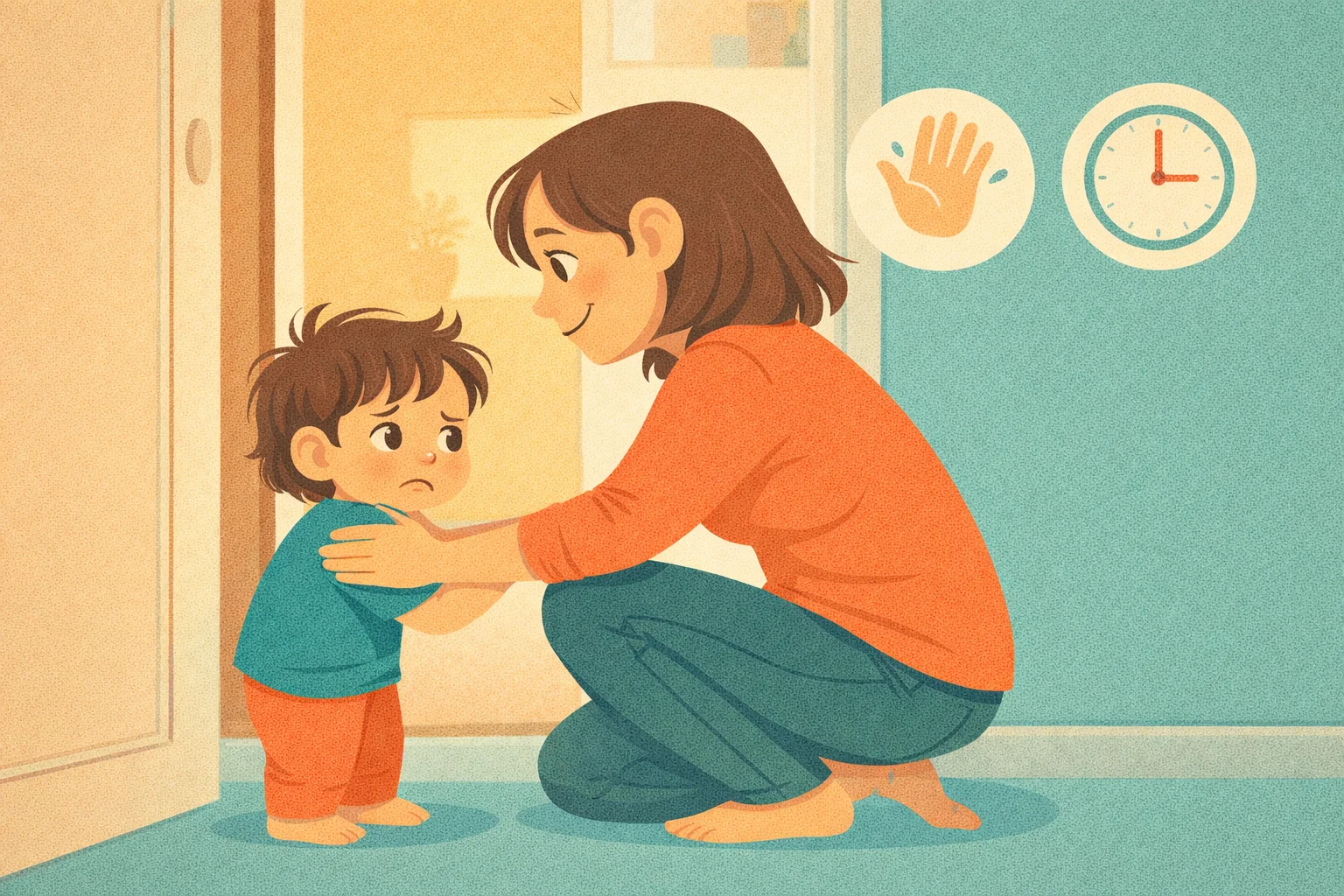
It's 8:12 in the morning. You're standing at the daycare door, your child clinging to your arm, face buried in your jacket. "Don't go, Mommy. Please don't go." The caregiver is already waiting with a friendly smile. You know you should have let go by now — but how? And as you finally pull away and the door closes behind you, the guilt gnaws at you all morning long.
If this sounds familiar, you're not alone. Separation anxiety in children is one of the most common struggles parents of young children face — and at the same time one that looks so simple from the outside and feels so hard from the inside.
- ✓Separation anxiety is biologically hardwired — it is not a parenting failure
- ✓It has typical peaks: 8–18 months, 2–4 years, and at the start of daycare or school
- ✓A short, reliable goodbye ritual is the most effective tool you have
- ✓Sneaking away makes the anxiety worse in the long run — even if it feels easier in the moment
- ✓Your own calm and confidence transfers directly to your child
This article isn't about quick fixes. It's about helping you truly understand what's happening inside your child — so that the next daycare drop-off, the next bedtime, or the next visit to grandma's is a little easier for both of you.
If you want to go deeper on the topic of children's fears, our comprehensive guide to anxiety in children has even more background and strategies.
Separation Anxiety Is Normal — and Developmental
Let's start with something important: separation anxiety is not a sign that you've done anything wrong. It's not a weakness in your child. And it's not a bad sign about your bond — quite the opposite.
Separation anxiety is the result of a deep attachment. Your child loves you. They need you. And their brain is wired to sound the alarm when that connection is interrupted.
The evolutionary logic: Human babies are dependent on caregiving for an unusually long time compared to other mammals. That means the biological survival strategy of a young child is: stay close to my caregiver. Separation anxiety is literally a built-in protective mechanism — it keeps the child near the person who can best keep them safe.
When Does Separation Anxiety Tend to Peak?
There are typical developmental phases when separation anxiety becomes more frequent and more intense:
- 8 to 18 months: Your baby now understands that you exist even when they can't see you — but they can't yet gauge whether or when you'll come back. This is the first major peak.
- 2 to 4 years: The world gets bigger, and so does the imagination. Toddlers at this age can vividly picture all the things that might happen when you're not there.
- Starting daycare or school: Even if a child already knows the setting — a new year, a new group, a new daily routine can shake things up all over again.
Why Separation Anxiety Happens: What's Going On in Your Child's Brain
To understand why logic barely works with separation anxiety, it helps to take a quick look at the brain.
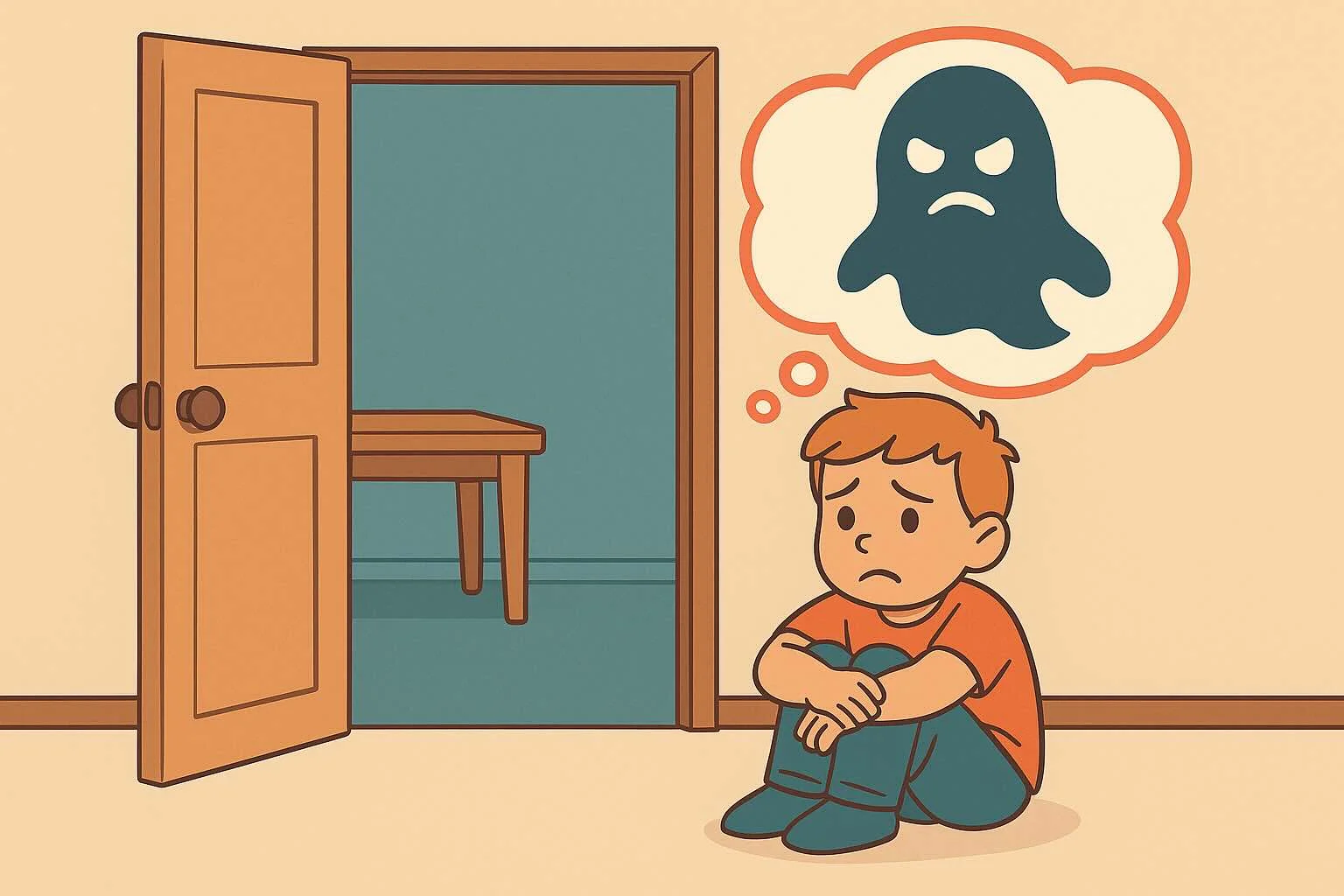
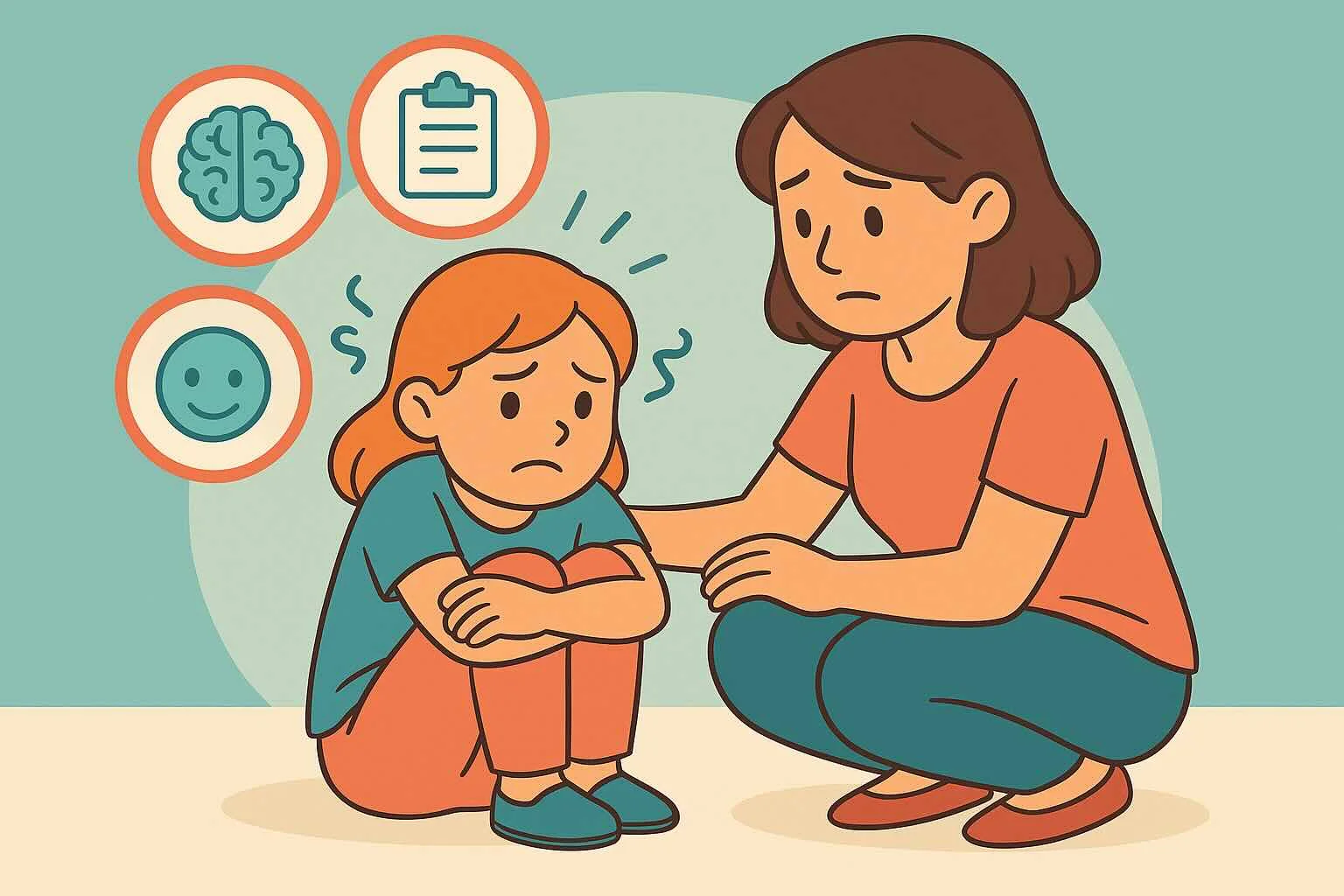
When your child senses the separation, the amygdala — the part of the brain responsible for detecting threats — fires. It sounds the alarm. Stress hormones flood the system. The heart beats faster, breathing becomes shallow, the stomach and belly send distress signals.
In this state, the prefrontal cortex — the thinking, planning part of the brain — is barely reachable. That's why it doesn't help much to say: "You already know your teacher. Nothing's going to happen to you. Don't be like this..." Your child may even know all of this. But their body is already in alarm mode.
What actually helps is your own calm. When you seem calm, steady, and confident, that sends a signal to your child's nervous system: This situation is safe. Mom/Dad isn't worried. I'm safe too. Your composure isn't a luxury — it's the most powerful tool you have.
Separation Anxiety at Daycare, Bedtime, and More
Daycare Drop-Off
The morning goodbye is the most intense separation situation for many families. There's a simple reason: it happens every day, often under time pressure, and your child knows exactly what's coming.
The most important thing you can do is develop a short, consistent goodbye ritual. It doesn't have to be elaborate — a hug, a specific phrase ("I'll pick you up after lunch, I love you"), maybe a small gesture like a high five. And then: a clear goodbye.
The reliability of the ritual gives your child something to hold onto. They know: this is how it goes. And then Mom/Dad comes back.
If you'd like to read more about starting daycare or preschool, our articles Starting Preschool at Age 4 and Starting Daycare at Age 3 are full of practical tips.
Falling Asleep Alone
"Child won't sleep alone" is one of the most searched phrases related to separation anxiety — and for good reason. At night, conditions are particularly intense: it's dark, it's quiet, and a toddler's imagination is running at full speed.
What helps at bedtime is essentially the same as at daycare drop-off: predictability. A clear bedtime routine (brushing teeth, reading a story, singing a song, goodnight kiss), clear words ("I'm right next door, you're safe"), and a comfort object — a stuffed animal, a T-shirt with your scent — that gives your child a sense of connection even when you're not there.
If bedtime separation anxiety is particularly intense, also take a look at our article on bedtime fears and anxiety.
Separation Anxiety with Grandparents or Unfamiliar Adults
Many parents are surprised when their child suddenly refuses to stay even with familiar people like grandparents. This is normal — especially after periods of limited contact (vacations, illness), the connection can feel "unfamiliar" to the child.
What helps here: give it time. Do things together as a group of three before you leave. Tell your child clearly when you'll be back and follow through reliably. And never apply pressure.
What Actually Helps with Separation Anxiety?
Here are the strategies that have proven effective in research and in the daily lives of many families:
1. Develop a reliable goodbye ritual Short, clear, always the same. The ritual provides structure in a moment that feels chaotic to your child.
2. Use clear language about coming back Children barely understand "later" or "soon." Instead, use concrete anchors: "I'll pick you up after lunch," "I'll be there when you wake up." And then: follow through.
3. Use comfort objects A stuffed animal, a small photo of you, a simple bracelet you both wear — these objects help your child maintain a sense of connection to you even when you're not there. They bridge the gap between feeling safe with you and feeling safe without you.
4. Validate feelings before you leave Not: "It's not that bad." Instead: "I know this is hard for you right now. You miss me, and that makes total sense." This doesn't take away your child's sadness — but it takes away the shame about feeling it.
5. Regulate your own nervous system Your child reads you. If you seem stressed, guilty, or anxious, that confirms their alarm. This doesn't mean you can never show emotions — but a calm, confident goodbye ("I know you can handle this. See you soon.") is the most powerful thing you can do.
What Makes Separation Anxiety Worse?
There are some well-meaning responses that reinforce separation anxiety in the long run rather than easing it:
Dismissing feelings: "It's not that bad," "Don't be a baby," "The other kids aren't crying either" — these phrases tell your child: your feelings are wrong. That teaches them to hide their feelings rather than learn to handle them.
Dragging out the goodbye: One more hug, one more attempt at comfort, one more explanation... The longer the goodbye, the more you unconsciously signal: I'm not sure this is okay either. A long goodbye increases anxiety — it doesn't ease it.
Avoiding separation altogether: If you sidestep every situation that triggers separation anxiety, your child never learns that they can endure these feelings and come out the other side. The fear of fear grows.
Giving in at bedtime out of exhaustion: It's tempting to just stay with your child until they fall asleep — but if that becomes the rule, your child learns: I can only sleep when someone is there. That makes the next step harder.
Concrete Phrases for Goodbyes and Reunions
Sometimes you know what you shouldn't say — but not what to say instead. Here are some concrete examples:
Stop crying! You know your teacher already. It's really not that bad!
I can see the goodbye is hard today. I love you. I'll pick you up after lunch.
I'll just be gone for a minute — you won't even notice I'm gone!" (and then sneaking off)
I'm saying goodbye now. This is our goodbye hug. I'll be back when you wake up.
Why are you so scared? That's Grandma — you know her!
You just need a little time to warm up. That's okay. I'll stay a bit, and then we'll see how you're feeling.
When you come back: Children who experience strong separation anxiety sometimes need a few minutes to emotionally re-anchor when you pick them up. Give your child time — and avoid the enthusiastic "See, it wasn't so bad after all!" comments. Better: "I'm so glad to be back. I missed you."
When Is Separation Anxiety a Problem?
Most separation anxiety in children is developmentally normal and fades on its own over time with support. But there are moments when it makes sense to seek professional guidance.
Watch for these signs:
- The anxiety has persisted for more than 4 weeks without easing up
- Your child is developing physical symptoms like ongoing stomach aches, headaches, or sleep problems
- Attending daycare or school is consistently not possible
- The panic can barely be calmed even with intensive soothing
- The separation anxiety is spreading to more and more situations
This is not failure — it's a signal that your child needs more support right now than you can provide on your own. A conversation with your pediatrician or a family counseling center is a wise next step. Sometimes just a few sessions are enough to find a new way forward.
Conclusion: Your Child Is Learning That Separation Is Safe
Separation anxiety doesn't resolve through willpower or pressure — it resolves through repeated experiences that separation is safe and that coming back happens reliably.
Every time you say a clear goodbye and return at exactly the time you promised, you build an internal map in your child: The world is safe. My caregiver comes back. I can do this.
That takes time. There will be setbacks. And some days you'll still drive to work with a knot in your stomach. That doesn't make you a bad parent — it makes you a person who genuinely cares about their relationship with their child.
If you'd like more support, also take a look at our articles on fear of new experiences and emotional safety as a foundation.
Frequently Asked Questions
Download RootWise Today


Need personalized support?
RootWise's AI coach can provide tailored strategies for your specific situation, available 24/7 when you need it most.
Learn More About AI Coaching →