2 Year Old Bedtime Routine: The Complete Guide to Peaceful Nights

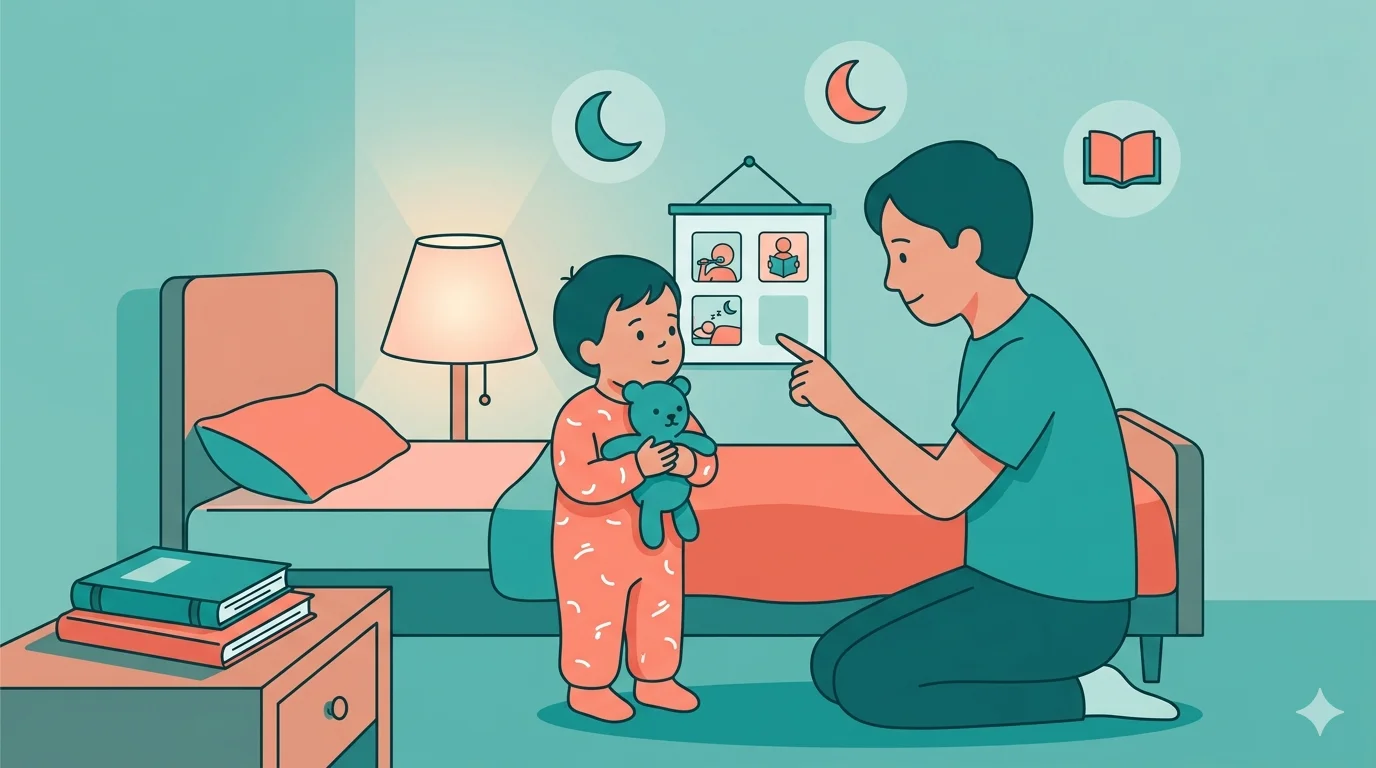
The math of 2-year-old bedtime is unforgiving. You've been awake since 6am. Your toddler needs to be asleep by 7pm to get enough rest. That gives you one hour to navigate the bath, the pyjamas, the stories, the "one more hug," the water request, the suddenly urgent need to tell you something very important about their day, and the four separate returns to the room after you've said goodnight.
By the time they're finally asleep, you're often too exhausted to enjoy the quiet.
Two-year-old bedtime is genuinely hard — not because you're doing it wrong, but because your child is at a developmental intersection of separation anxiety, surging independence, and limited emotional regulation. The same child who spent the day asserting their autonomy ("No! Me do it!") becomes, at bedtime, someone who cannot bear the idea of you leaving the room.
This guide will help you build a routine that works with your toddler's brain, not against it — and transform bedtime from the hardest part of your day into something you can both get through with your relationship intact.
- ✓Separation anxiety peaks at 18 months-2.5 years — bedtime resistance is developmental, not manipulation
- ✓Aim for a 6:30-7:30 PM bedtime; missing the window by 30-45 minutes creates cortisol-driven second wind
- ✓The 5-step routine (wind-down, bath, PJs/teeth, stories, goodbye ritual) takes 20-30 minutes total
- ✓Use micro-choices to preserve autonomy ("dinosaur or star PJs?") without surrendering the structure
- ✓For curtain calls, use one identical response delivered warmly every time — consistency resolves them in 1-2 weeks
Understanding the 2-Year-Old at Bedtime
Why Separation Hits Hardest at Night
Separation anxiety peaks between 18 months and 2.5 years — which means most 2-year-olds are at the height of it when bedtime arrives. This is not a behavior problem. It is a developmental reality rooted in your toddler's emerging understanding of the world.
At 2, your child knows that you exist when they can't see you (object permanence is fully established), but they don't yet have the emotional regulation skills to tolerate your absence comfortably. They understand that "goodnight" means you're leaving — and they genuinely don't know with certainty that you'll come back, feel safe, or be okay without them. Their distress is real.
The bedtime separation is, to a 2-year-old's nervous system, a mini-crisis. Understanding this changes everything about how you respond to it.
The Overtiredness Trap
There's a cruel paradox in toddler sleep: the more overtired a 2-year-old becomes, the harder it is to get them to sleep. Cortisol — the stress hormone — spikes when toddlers are past their sleep window, producing a second-wind effect. They become hyperactive, emotional, and harder to settle at precisely the moment when they most need rest.
The solution is an earlier bedtime than feels intuitive. Most parents of 2-year-olds find that a 6:30-7:30 PM bedtime produces the easiest settling. Missing the window by even 30-45 minutes can turn a manageable routine into a prolonged battle.
Watch for your child's tired cues: rubbing eyes, pulling at ears, becoming clingy or irritable, losing interest in play, or becoming hyperactive and silly. These are signals to begin the wind-down, not to squeeze in one more activity.
The "No" Phase Meets Bedtime
Your 2-year-old is in the middle of one of the most important developmental phases of their life: the emergence of autonomy. The same drive that produces "No!" and "Me do it!" is what will eventually produce a confident, self-directing adult. Right now, it also produces bedtime battles.
The most effective approach is not to override the autonomy drive but to give it appropriate channels. Micro-choices within the routine ("Which pyjamas — the dinosaur ones or the star ones?", "Do you want one story or two tonight?", "Should Teddy sleep on this side or that side?") preserve your child's sense of agency while keeping the structure intact.
When they feel in control of the parts they can reasonably control, they're less compelled to fight for control of the parts they can't.
2 Year Old Sleep Schedule: Your Ideal Bedtime Timing
Here's a sample schedule for a toddler with an afternoon nap ending by 3:00 PM and a target bedtime of 7:00 PM:
| Time | Activity |
|---|---|
| 5:30 PM | Dinner |
| 6:00 PM | Wind-down play (calm — no screens, no rough play) |
| 6:15 PM | Bath or wash (warm water aids the body's sleep transition) |
| 6:30 PM | Pyjamas, nappy/underwear, teeth |
| 6:40 PM | Stories in the bedroom (1-2 books) |
| 6:55 PM | Final goodbye ritual + lights out |
| 7:00 PM | Sleep |
Adjust by 30-45 minutes in either direction based on your child's tired cues and nap schedule. The key is consistency — the same sequence every night signals the brain that sleep is coming.
The 5-Step 2-Year-Old Bedtime Routine
Step 1: Start the Wind-Down Early
Begin winding down at least 45 minutes before lights out. This means:
- No screens (blue light suppresses melatonin, the sleep hormone)
- No rough or stimulating play
- Dimmed lights, lower noise levels
- Calm, connected activity: simple puzzles, colouring, reading together on the couch
Why it matters: The nervous system needs time to downshift from the activation of daytime. For a 2-year-old, the transition from full-throttle play to sleep readiness takes 30-45 minutes of gradual deceleration. Trying to go directly from active play to bed rarely works.
Script for the transition: "Okay, we're going to start getting ready for sleep soon. Do you want to do one more puzzle or look at books before bath time?"
Step 2: A Warm Bath or Wash
A warm bath 1-2 hours before bedtime is one of the most effective sleep-onset tools available to parents of toddlers. As the body warms in the water and then cools after the bath, core body temperature drops — a biological signal that triggers drowsiness.
How to make it work:
- Keep the bath warm, not hot
- Keep it calm — this is not playtime tonight, it's transition time
- Have pyjamas, nappy, and toothbrush ready to minimize friction after
If a bath every night isn't practical, a warm face and hand wash works nearly as well.
Script for getting in: "Bath time! Let's choose one bath toy tonight. Do you want the duck or the boat?"
Step 3: Pyjamas, Nappy, and Teeth
This step is often where power struggles emerge — your toddler's autonomy instinct collides with the need to get things done efficiently. Micro-choices are your best tool here.
Choices that help:
- "Which pyjamas tonight?"
- "Do you want to put your arms in first or your legs?"
- "Do you want the strawberry toothpaste or the mint?"
- "Can you put the toothpaste on yourself, or shall I help?"
Keep this step moving — linger too long and the overtiredness tips into irritability. If your toddler genuinely resists, narrate calmly and move steadily: "Pyjamas on, then teeth, then stories. We're nearly there."
Step 4: Stories in the Bedroom
Two to three short books in the bedroom is the heart of the routine — and worth getting right. Stories serve multiple purposes: they're a reliable wind-down, they provide connection before separation, and they give your child something to anticipate during the earlier steps.
How to make stories work:
- Keep books short (10-12 pages maximum at this age)
- Let your child choose the books (with a limit: "You can pick two tonight")
- Read with a slow, quiet voice — this models the state you want them to move toward
- Snuggle physically — this releases oxytocin and reduces stress hormones
Handling the "one more book" request: Pre-empt it by being explicit upfront: "Tonight we're doing two books, then sleep time." When they ask for more, hold warmly: "We said two books, and we did two. Sleep time. Which animal do you want Teddy to be next to tonight?"
Step 5: The Goodbye Ritual
The goodbye ritual is the most important minute of the entire routine. Make it predictable, brief, and always the same. Predictability is what allows your child to stop anxiously waiting for the unknown ending and start accepting the known one.
A sample ritual:
- Three kisses (nose, cheeks, forehead)
- Tuck Teddy in beside them
- "Goodnight, [name]. I love you. Sleep tight. I'll see you in the morning."
- Lights out or nightlight on
- Door to agreed position (open crack, half open, whatever is your normal)
- Leave
The check-back promise: If your child's separation anxiety is significant, add one concrete promise: "I'll check on you in 5 minutes." Then do it — open the door, whisper "I'm here, you're safe, goodnight," and leave again. Keep the check-back window the same every time. Over days and weeks, the relief of knowing you'll return builds the security they need to stop fearing the separation.
Handling the Curtain Calls
The curtain call — returning repeatedly after goodnight with requests for water, another hug, a bathroom trip, a very urgent thought — is almost universal at 2. It is also the place where many parents' consistency breaks down, which inadvertently teaches the child that persistence works.
Pre-empt the most common requests within the routine:
- Offer water during stories so it's available
- Do a final bathroom trip before the last book
- Give two hugs as part of the goodbye ritual, not after
When they call out or come out: Use one response, delivered warmly and identically every time: "It's sleep time, I love you, back to bed." If they've come out of their room, walk them back with minimal interaction — no explanation, no negotiation, no visible frustration. Tuck them in again. Say the same phrase. Leave.
If you get out of bed one more time, I'm closing the door!
It's sleep time. I love you. Back to bed." (Walk them back. Same phrase. Every time.)
The first three nights of complete consistency are the hardest. Most toddlers make several attempts per night before settling. By nights four to seven, the frequency drops sharply. By two weeks, most children have stopped entirely — because they've learned that getting up produces nothing interesting.
Managing the 2-Year Sleep Regression
Many parents find that a toddler who was sleeping well suddenly starts resisting bedtime or waking at night around age 2. This is the 2-year sleep regression, linked to the massive developmental leap your child is undergoing: language explosion, cognitive advances, growing awareness of the world.
What it looks like:
- Sudden bedtime resistance after months of easy bedtime
- Increased night wakings
- Earlier morning wake-ups
- Changes in nap behavior (fighting naps, shorter naps)
- More separation distress than usual
What helps:
- Hold your routine firmly — this is not the time to change it, even if it feels like it's not working
- Increase daytime physical activity and outdoor time
- Ensure the nap is not ending too late in the day
- Increase connection and reassurance during the day
- Wait it out — regressions typically resolve within 2-6 weeks with consistent handling
Your 4-Week Plan for Establishing the Routine
Week 1: Build the Structure
- Establish the 5 steps in order, at a consistent time, every night
- Create the bedtime routine chart together (pictures for each step)
- Begin the wind-down 45 minutes before bedtime — no screens, calmer play
- Track: How long does settling take from first goodnight to sleep?
Week 2: Refine the Goodbye Ritual
- Establish a fixed, 3-step goodbye ritual and use it identically every night
- Introduce the check-back promise if separation anxiety is significant
- Pre-empt the top two curtain call requests within the routine
- Track: How many curtain calls per night? (Expect more before fewer during testing.)
Week 3: Handle Curtain Calls Consistently
- Use the "boring return" for any out-of-bed behavior — same phrase, same action, zero engagement
- Keep the wind-down window firm even on busy evenings
- Adjust bedtime by 30 minutes earlier if settling is taking longer than 20 minutes
- Track: Is the settling time getting shorter? Are curtain calls decreasing?
Week 4: Consolidate and Enjoy
- The routine should now be running smoothly most nights
- Note which elements your child looks forward to (stories, the goodbye ritual) and protect them
- Acknowledge progress with your child: "You've been going to sleep so well. I love our bedtime together."
- Hard nights will still happen — illness, excitement, disrupted nap days. Hold the routine and return to baseline the next night.
What to Expect: A Realistic Timeline
Nights 1-3: The testing period. Your child will push every new boundary to see whether it holds. Expect more curtain calls and more resistance than usual. This does not mean the routine is wrong — it means they're assessing whether you're serious.
Nights 4-7: A clear improvement. Settling time shortens. Curtain calls decrease. You'll have your first night where everything goes smoothly and find yourself surprised by how quickly it was over.
Weeks 2-3: The routine becomes expected. Your child starts anticipating the steps — reaching for the toothbrush before you ask, choosing their books before you sit down. The goodbye ritual begins to feel settled rather than contested.
Month 2: The routine is established. Most nights are smooth. Disruptions (illness, travel, schedule changes) happen but recovery to the routine is quick — usually one night.
Your Next Steps
Toddler bedtime is hard, and that's not a reflection of your parenting. It's a reflection of where your child is developmentally: big feelings, a strong will, separation anxiety, and a brain that hasn't yet learned to wind itself down independently.
The routine you build now will carry you through the toddler years and beyond. The investment in consistency during these weeks pays dividends in sleep — for your child and for you.
If nights are disrupted by wakings after your child falls asleep, our guide on night wakings covers what's happening and how to handle it calmly. For a broader look at toddler sleep patterns and what's developmentally normal, our toddler sleep regression complete guide explains the stages and how to navigate them.
If separation anxiety at bedtime is intense, our separation anxiety guide addresses the emotional roots and gives additional strategies beyond the bedtime routine.
As your child approaches their next birthday, our 3-year-old bedtime routine guide outlines how the routine evolves as imagination, negotiation skills, and bedtime fears grow.
You're not trying to force your toddler to sleep. You're creating the conditions — the safety, the predictability, the connection — in which sleep can happen naturally. That's a different thing, and it's the thing that works.
Frequently Asked Questions
Download RootWise Today


Need personalized support?
RootWise's AI coach can provide tailored strategies for your specific situation, available 24/7 when you need it most.
Learn More About AI Coaching →