Teaching Independence: Daily Life Skills for Kids 2-6 (The Global Shift)

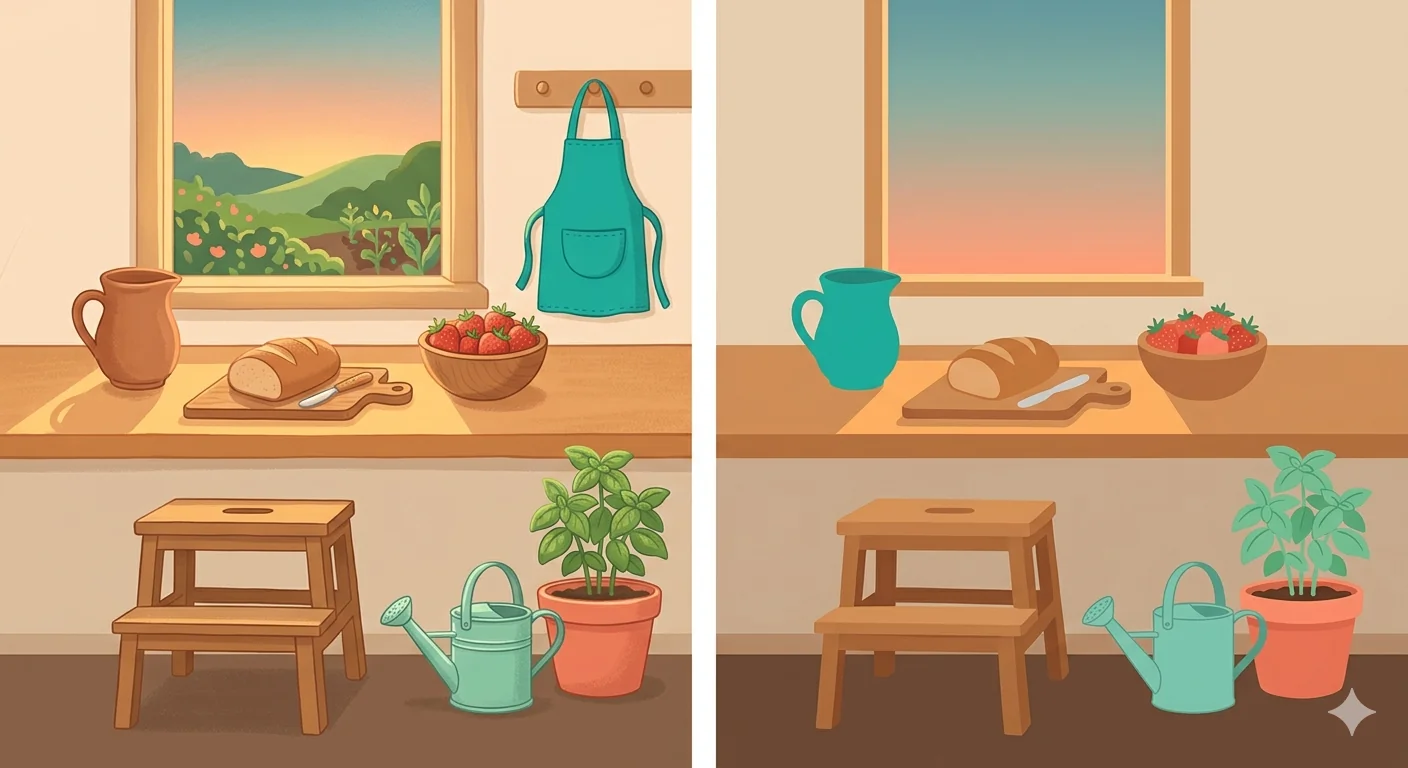
Your 3-year-old can pour her own water. You're just doing it for her because it's faster.
This is the simple insight at the heart of one of 2026's biggest parenting shifts. Western parenting culture spent two decades optimizing for enrichment - reading apps, music classes, advanced math, "gifted and talented" tracks - while quietly outsourcing the daily life skills that actually build a competent human. The result, in many households: 6-year-olds who can solve a math worksheet but can't pack their own snack.
The 2026 reframe, borrowed loosely from a viral post about Chinese kindergartens and from a long Montessori tradition: competence first, performance later. This guide is what that looks like at every age from 2 to 6, why it matters, and how to start without overhauling your week.
- ✓Western parenting optimized for enrichment; 2026 is correcting toward life-skills competence first
- ✓A viral May 2026 X post about Chinese kindergartens (cooking, cleaning, crafting) hit 7,000+ likes and nearly 2,000 reposts
- ✓Kids who handle real tasks show fewer tantrums, not more - competence reduces helplessness
- ✓2-year-olds can already do far more than most parents allow
- ✓The biggest single shift: stop doing tasks for them because it's faster
- ✓One new skill per week compounds to ~50 new capabilities over a year
The 2026 reframe: competence first, performance later
For about 25 years, mainstream Western parenting framed early childhood as a window for academic and developmental optimization. Reading apps for 18-month-olds. Music classes for 2-year-olds. Foreign language exposure starting at birth. The implicit theory: stuff as much input as possible into the developmental window and you maximize the output.
The 2026 reframe says something different. The developmental window isn't primarily an academic one - it's a competence one. The 2-6 year old brain is wired to learn how to do things in the world: pour, dress, cook, clean, navigate, solve. Those skills, built through real practice with real materials, are the foundation that everything else (academic learning, social skills, emotional regulation) actually sits on.
Two pieces of 2026 social signal made this concrete:
A widely-shared X post about Chinese kindergartens incorporating hands-on cooking, cleaning, and crafting into their curricula hit over 7,000 likes and nearly 2,000 reposts in May 2026. The Western reaction was an uncomfortable question: why DO we treat life skills as separate from "real" learning?
A parallel viral post from a parenting account had a different angle but the same chord: "For the first six years, give your child one thing in abundance ... Love. Unconditional, undivided, and without agenda. Let learning come later." Nearly a thousand likes, hundreds of reposts. The shared insight: the foundation isn't worksheets. It's love + competence.
The "do it for them" trap
The single biggest reason parents don't teach life skills is it's faster to do it yourself.
You're trying to leave the house. Your 4-year-old is wrestling with her left shoe. You have a 9am call. You bend down and put on her shoes.
This decision, made fifty times a week, compounds. The 4-year-old who is always getting her shoes put on is the 6-year-old who still can't do it confidently. The 6-year-old who can't pack her own snack is the 9-year-old whose mother is still packing lunches. The 9-year-old whose mother packs lunches is the 14-year-old who has never had to handle real responsibility for her own day.
The fix is not to never help. The fix is to consciously identify the tasks they could be doing for themselves, and let them - on the days you have time, on the weekend mornings, on the slow afternoons. Once they have the skill, it's theirs.
The "do it WITH them" frame
The other common mistake is jumping from "I do it for them" to "they have to do it alone."
For ages 2-5, almost all life skills are learned with an adult, not independently. You're not assigning chores. You're inviting them into the work.
This looks like:
- You wash the dishes; they stand on a step stool next to you and dry the spoons.
- You make dinner; they tear lettuce or mix dressing or push the buttons on the rice cooker.
- You sort laundry; they hand you matching socks.
- You water the plants; they hold the watering can.
- You make the bed; they pull the pillow up.
The framing matters enormously. "Help me" is engaging. "Go do this" is a chore. Same task, different developmental moment.
Go set the table. I'll be in here when you're done.
Come help me set the table. You take the napkins, I'll take the plates.
By age 6-7, you can shift more tasks to "you do this independently while I do that." But the 2-5 year old window is collaborative, not solo.
Age-by-age life-skills map
Age 2
What they can actually do:
- Wash hands at a step stool
- Brush teeth (with parent finishing)
- Put dirty clothes in a hamper
- Help wipe up small spills
- Carry their own (small, unbreakable) plate to the sink
- Put on Velcro shoes (crooked is fine)
- Turn faucets on and off
- Put a toy back where it belongs (with reminder)
- Hand you items from a low shelf when cooking
- Help carry groceries from the car (one item)
What to drop the bar on:
- They will be slow.
- They will spill.
- They will put the shoe on the wrong foot.
- They will need 20 reminders to put the toy back.
All of this is the work. The competence is built in the doing, not in the doing-correctly.
Age 3
Skills come online fast at 3.
- Pour water from a small pitcher (use a real glass, not plastic - they treat real glass with appropriate care)
- Butter own toast with a butter knife
- Put on most of their own clothes (you still help with backwards shirts)
- Brush teeth (you finish; they do the first round)
- Sort silverware from the dishwasher
- Water houseplants (use a small can)
- Set their own placemat and cup
- Hang up their own coat on a low hook
- Wash a few veggies with you at the sink
- Crack an egg (yes, really - they will get shell in it; that's fine)
- Push the start button on the dishwasher or washing machine
Ages 4-5
By 4-5, most kids can do astonishing things if given the chance.
- Dress themselves completely (including buttons and zippers with practice)
- Pack their own snack for an outing (from a designated snack bin)
- Help with simple cooking: mixing, cutting soft foods with a kid-safe knife, cracking eggs, measuring ingredients
- Set the whole table
- Sweep with a child-sized broom
- Fold simple laundry (washcloths, undies, hand towels)
- Feed and water a pet (with reminder)
- Wipe their own bottom (4-year-olds; check whether your child has actually been taught and given the chance)
- Make their own bed (loosely)
- Help carry groceries in
- Put away groceries on the lower shelves
- Start basic kitchen cleanup (load own plate to dishwasher, wipe own spot at table)
- Tie shoes (around age 5 with practice)
Age 6
The 6-year-old is ready for real routines.
- Morning routine independently (dress, teeth, hair, shoes, backpack) with a checklist
- Pack own lunch from prepared ingredients
- Make a simple breakfast (cereal, yogurt with toppings, toast with topping)
- Run a small chore cycle (clear table after dinner, take out small trash bag, fold towels)
- Vacuum a room with a real vacuum (with supervision)
- Manage a small allowance
- Read a recipe and follow simple steps
- Start to time their own activities (set a kitchen timer)
- Begin handling small money transactions (give the cashier the money, count change)
The 60-second "should I do this for them?" test
Before you do any task FOR your child, ask:
- Is this something a child their age can physically do?
- Do we have an extra 5 minutes right now?
- Would they learn something from doing it themselves?
If the answer to all three is yes, let them do it. Even if it's harder. Even if it's messier. Even if you would do it differently.
If the answer to (2) is no - you genuinely don't have 5 minutes - then go ahead and do it for them, without guilt. Some moments are about getting through. Save the teaching moments for when you have time to actually teach.
The Saturday-morning "competence ritual"
A pattern many families have settled into in 2026: a Saturday-morning ritual where life skills are the explicit point.
You're not in a rush. You're not trying to get to school. You have time.
- 8am: Kid pours their own cereal and milk. (Spill is fine.)
- 8:15am: Kid helps load the breakfast dishes.
- 8:30am: Kid picks one chore from a small list - feed the cat, water the plants, fold the towels, sort the laundry.
- 9am: Kid helps you start a baking project or a craft. Real ingredients, real tools.
- 10am: Kid helps clean up.
You're not adding work. You're slowing down what was already happening and including them as participants. By a year of Saturdays, you have a child who knows how a household runs.
Why competence reduces tantrums
This is the part that surprises most parents.
A child who can solve more of their own problems experiences less of the helplessness that drives many tantrums. They can get their own water without asking. They can put on their own shoes. They can find their own snack from a designated bin. A whole category of stuck-and-need-help meltdowns simply disappears.
The same child experiences more agency - the felt sense that they can affect their environment. Agency reduces the power-struggle category of tantrum (the "you can't make me" tantrums). A child who already does meaningful work doesn't need to fight you for autonomy at the door.
Montessori environments, which have been designed around competence-first principles for over a century, consistently show lower tantrum frequency than conventional preschools. The mechanism isn't magic. It's competence.
See our toddler tantrums science guide for the brain-level explanation of why this works.
What to NOT do
Three traps to avoid:
1. Don't make it a chart with stickers and rewards. Competence is its own reward. Adding external rewards undermines the intrinsic motivation. Most child development experts now recommend NOT paying for basic family contribution, and using sticker charts sparingly if at all. The right reinforcement is "you did it" - the felt sense of having done the thing.
2. Don't fix their work after they do it. If your 3-year-old made the bed crookedly, leave it crooked. If your 4-year-old set the table wrong, eat at the wrong-set table. Re-doing their work undoes the learning and signals their effort wasn't real.
3. Don't pull skills back when they're inconvenient. "I'll do it today because we're in a hurry" is fine occasionally. "I'll do it for you all week because mornings are crazy" trains them out of the skill. Build the skill on slow days; deploy it on busy ones.
What to do this week
Three concrete starts:
- Pick one task you currently do for your child that they could do for themselves. Add it to their list this week. Hold the line even when it's slower.
- Set up a low shelf or drawer with one category of "their" supplies. Could be snacks, could be art supplies, could be cups and bowls. Anything that converts "ask mom for X" into "go get X yourself".
- Block one slow morning for the Saturday ritual approach. Cook something together. Clean something together. Plant something. The point is the doing-together, not the output.
What to read next
- Building cooperation without rewards - the parenting voice that fits this approach
- Authoritative parenting guide - the underlying research model
- Boredom and free play - the other half of "fewer activities, more capability"
- Gentle vs hybrid parenting - the discipline frame that supports independence
- 2026 parenting trends round-up - the full picture
The one-line summary
Your 3-year-old can pour her own water; you're just doing it because it's faster. Slow down. Pick one task a week she takes over. In a year you'll have a strikingly competent child, and you'll have done one of the highest-leverage things possible for her brain and her tantrum count.
Frequently Asked Questions
Download RootWise Today


Need personalized support?
RootWise's AI coach can provide tailored strategies for your specific situation, available 24/7 when you need it most.
Learn More About AI Coaching →